I know the topic isn't an easy target and many strong emotions rise when bringing it up. For those who feel offended I'm not in top shape myself and I've been bullied at school for this very same reason. But still it's worth writing for. Just to see a glimpse from doctor's point of view.
Currently I'm working at anesthesiology and to see heavily overweight patients makes me sigh because I know there's trouble ahead.
I'm writing this just to tell obese people view why physicians are so obsessed about their patient's weight. It's not about appearance, trust me. It makes our job extremely difficult in some cases and the cost of that just might be.. Well you know.
With obesity one is more likely to suffer from high blood pressure, lower limb osteoarthritis, sleep apnea etc. Making just about any diagnosis can be challenging. Listening to hear murmurs through a thick subcutaneous layer with your stethoscope, trying to locate a painful spot around the stomach, examining a chubby knee and realizing your muscles aren't big enough to lift it.
Then again we have all sorts of tests we can do, right? Lab results are rather reliable if one takes into account the size of the patient. In some cases the plasma is carrying too much lipids which can alter some results. X-rays are hard to read because the fat layer impairs the quality. Same goes for ultrasound. With CT or MRI scans the staff has to take into consideration whether or not the patient fits the cylinder.
Surgery and later physiotherapy repeat all these challenges from their own point of view.
So why does an over weight patient make my blood pressure rise? When putting patients to sleep for an operation you need to take care of their breathing. Usually this means intubation. Just because there isn't much space inside the throat this is difficult. Always. Then again there's extra weight above the lungs pulling them down. Ventilation machines are always fighting back when I make my adjustments. Heavy obesity also affects drug doses, blood pressure stabilizing, recovery and so on.
Westerns society is suffering from obesity. And the answer to the problem is not alone in the hands of medical doctors, but we do have our share. Information is one part of it.
For any overweight reader. I don't wish to overbear you. I'm sure obesity in your case is not a simple thing. I don't think it ever is. But you could be healthier and you could feel better. Sometimes the first step is like a baby step. How about turning to your physician? We don't know everything but we do know a lot. And we can help.
Showing posts with label Global Health. Show all posts
Showing posts with label Global Health. Show all posts
Saturday, 9 November 2013

Friday, 16 November 2012
What is health?
Last night I gave a speech to colleagues about global health issues. Some were surprised as I tried to answer the question above.
Patients as well as the media often think that you have a better chance to stay healthy, if you have easy access to healthcare. True, but not the whole truth I dare say.
Nomenclature is a bit funny here. We talk about healthcare and at the same time mean two rather different things. Firstly the system is there to keep healthy people healthy. Secondly it is supposed to cure the sick or otherwise give them aid. From a doctor's point of view the latter is closer to our education. Quite frankly I'd give more responsibility of the previous for personal trainers, dietitians, nurses etc. If you're healthy, they can help you to stay that way a lot better than a doctor.
What are the factors that affect to the health of an individual? Apart from age, genes and sex the environment plays an important role. Environment with it's physical and social elements have major impact on our health. Questions like sanitation, pollution, water supply and climate change area easily big globally. In Mongolia's capital Ulan Bator winter time is hard on one's lungs. Smoke takes over and you can hardly see your neighbour's house. Nearly everyone I met there complained about pulmonary symptoms.
In social sense economics, gender, social status and education are all major players on the health of individuals just as nations. Take for instance Non-Communicable diseases, which are a major health challenge globally acknowledged also by World Health Organization. These often result after series of choices done in previous years. Smoking, alcohol consumption, seat belts, sports etc. Fast food is cheap. Healthier food is usually expensive and takes time to cook. Or obesity, why do you think it is rather common in women coming from Arabic countries.
Adding to the list is of course access to healthcare services. But the above listing tells the secret why in so many countries grass root health work has done wonders. Barangai workers in the Philippines or community health workers in Nepal are doing the same work for the best of their country. I think in the West we are waisting our resources when trying to provide good health to our people. We've forgot what it takes to have good health.
Patients as well as the media often think that you have a better chance to stay healthy, if you have easy access to healthcare. True, but not the whole truth I dare say.
Nomenclature is a bit funny here. We talk about healthcare and at the same time mean two rather different things. Firstly the system is there to keep healthy people healthy. Secondly it is supposed to cure the sick or otherwise give them aid. From a doctor's point of view the latter is closer to our education. Quite frankly I'd give more responsibility of the previous for personal trainers, dietitians, nurses etc. If you're healthy, they can help you to stay that way a lot better than a doctor.
What are the factors that affect to the health of an individual? Apart from age, genes and sex the environment plays an important role. Environment with it's physical and social elements have major impact on our health. Questions like sanitation, pollution, water supply and climate change area easily big globally. In Mongolia's capital Ulan Bator winter time is hard on one's lungs. Smoke takes over and you can hardly see your neighbour's house. Nearly everyone I met there complained about pulmonary symptoms.
In social sense economics, gender, social status and education are all major players on the health of individuals just as nations. Take for instance Non-Communicable diseases, which are a major health challenge globally acknowledged also by World Health Organization. These often result after series of choices done in previous years. Smoking, alcohol consumption, seat belts, sports etc. Fast food is cheap. Healthier food is usually expensive and takes time to cook. Or obesity, why do you think it is rather common in women coming from Arabic countries.
Adding to the list is of course access to healthcare services. But the above listing tells the secret why in so many countries grass root health work has done wonders. Barangai workers in the Philippines or community health workers in Nepal are doing the same work for the best of their country. I think in the West we are waisting our resources when trying to provide good health to our people. We've forgot what it takes to have good health.
Wednesday, 14 November 2012
Mongolia in pics
I experienced this wonderful country in June, which was an early summer for the locals. It is a big country. Trust me. Did some bumpy car travelling. But the people are warm and proud of their history. This is how I saw it.


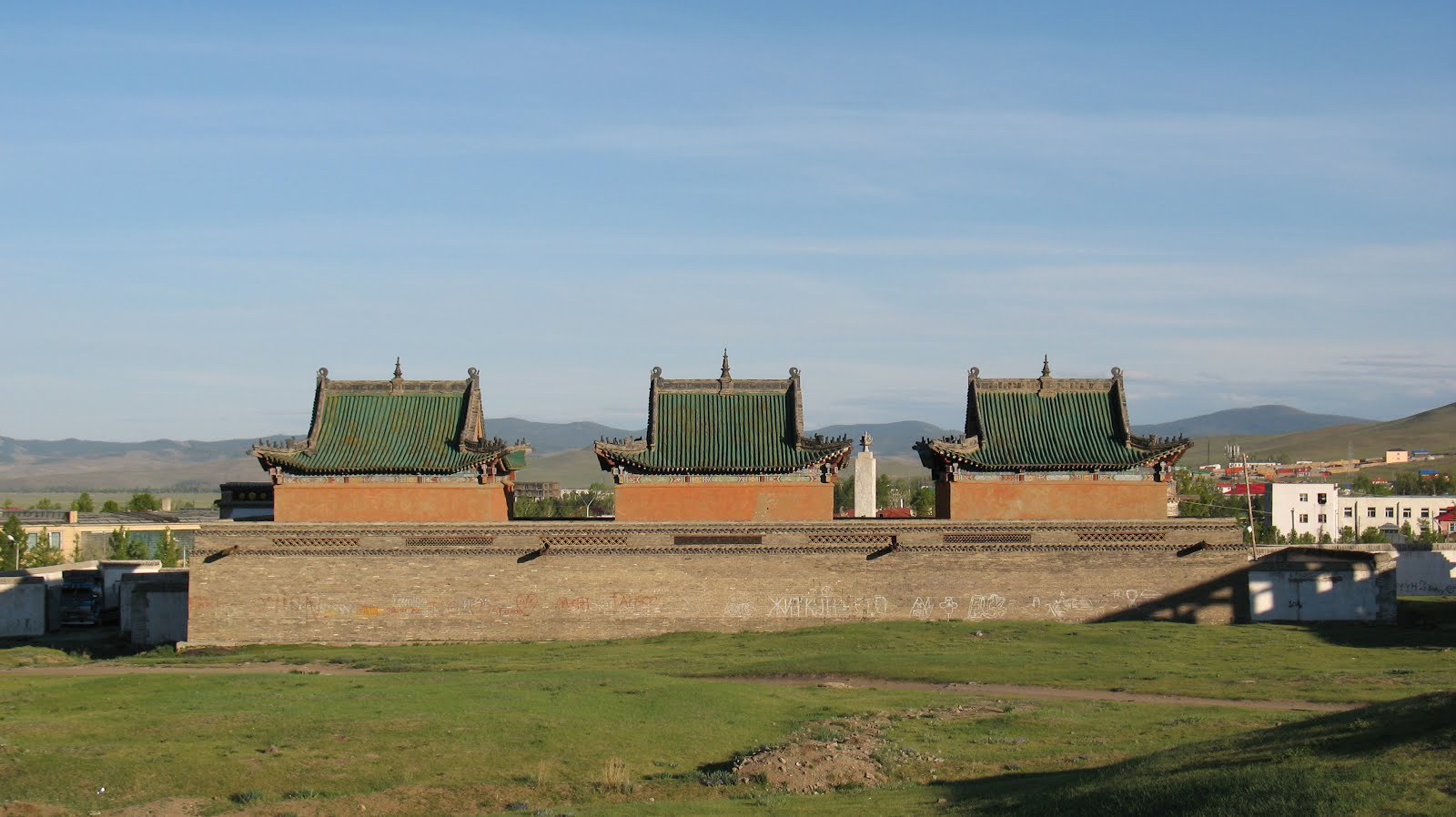
And naturally found myself once or twice at a hospital. Just kept my eyes open.


No horses this time.
Friday, 2 November 2012
Seasonal affective disorder
Sounds horrid doesn't it? Back here we mean Winter Blues. Why? Cause it gets so blimey dark.
Mental problems are not a very popular topic, but this one is an exception. Everyone's talking about it around this time of the year. At coffee breaks, with the family, in shops and among colleagues. We have to talk about it cause it affects nearly the whole nation.
Sounds crazy? Well imagine yourself driving to work in the morning and it's dark. The same happens in the afternoon while driving back. If you work indoors, you won't catch any sunlight during the week. If you're lucky, it might peek down on weekends. Before snowfall darkness feels really dark and that's not due in weeks. Meantime sun rises later and later every morning and sets earlier every afternoon.
How do we cope? We fight back!
A funny article made me realize how easily our way to face this time of year makes us feel even worse. A sigh comes out every time we look out the window. We give in to tiredness and slowly begin neglecting our own wellbeing. That's why I've come up with my own survival list.
1. Darkness is a good excuse to burn candles. Some people enjoy this time of the year, so I might give it a try and stop waiting for it all to be over.
2. Bright colors are allowed even though it's not summer. I'm investing on juicy colored nail polishes.
3. Friends are essential, just like laughter and good stories.
4. My girl Florence
I know it's dog days. But my singalong goes dark days.
5. Sports. My goodness how gyms, pilates groups, swimming pools and the lot are packed when we turn to November. And boy when the snow finally comes you can't go more hard core than skiing.
6. Spicy food. When it gets cold and dark outside get some fire in your mouth.. and belly.
7. Smiling is hard if you don't feel like it. But sometimes little bit of forcing is good for ya. At work I've realized that it spreads. Someone just has to lead the way.
8. Focusing on good things in your life. I should be a lot more grateful than I remember to be.
9. Light therapy. Philips I thank thee for building my loyal bright light lamp.
The New York Times on Light Therapy
Mental problems are not a very popular topic, but this one is an exception. Everyone's talking about it around this time of the year. At coffee breaks, with the family, in shops and among colleagues. We have to talk about it cause it affects nearly the whole nation.
Sounds crazy? Well imagine yourself driving to work in the morning and it's dark. The same happens in the afternoon while driving back. If you work indoors, you won't catch any sunlight during the week. If you're lucky, it might peek down on weekends. Before snowfall darkness feels really dark and that's not due in weeks. Meantime sun rises later and later every morning and sets earlier every afternoon.
How do we cope? We fight back!
A funny article made me realize how easily our way to face this time of year makes us feel even worse. A sigh comes out every time we look out the window. We give in to tiredness and slowly begin neglecting our own wellbeing. That's why I've come up with my own survival list.
1. Darkness is a good excuse to burn candles. Some people enjoy this time of the year, so I might give it a try and stop waiting for it all to be over.
2. Bright colors are allowed even though it's not summer. I'm investing on juicy colored nail polishes.
3. Friends are essential, just like laughter and good stories.
4. My girl Florence
I know it's dog days. But my singalong goes dark days.
5. Sports. My goodness how gyms, pilates groups, swimming pools and the lot are packed when we turn to November. And boy when the snow finally comes you can't go more hard core than skiing.
6. Spicy food. When it gets cold and dark outside get some fire in your mouth.. and belly.
7. Smiling is hard if you don't feel like it. But sometimes little bit of forcing is good for ya. At work I've realized that it spreads. Someone just has to lead the way.
8. Focusing on good things in your life. I should be a lot more grateful than I remember to be.
9. Light therapy. Philips I thank thee for building my loyal bright light lamp.
The New York Times on Light Therapy
Thursday, 1 November 2012
It's a Girl
Black turns to white and white to black depending on the light. This I feel is the modern method into ethics. Those who are for abortion no matter what easily object abortion based on gender.
"It's a Girl." Someone said those words when I was born. Luckily my mom and dad felt joy.
Sunday, 19 February 2012
GPH
Remember the scene from Diarios de motocicleta where young Ernesto "Che" Guevara chooses to treat patients with leprosy in an unorthodox way - as humans. A similar story can be told from Nepal. But to appreciate it you must understand what it means to be stigmatized.
A rural society is based on some ground rules. You're all more or less dependent on eachother. Weakest link easily weakens the whole surrounding. Add to that the caste system which states that people are unequal, no questions asked.
Leprosy is a communicable disease with a terrible echo. It was already mentioned in the Old Testament. Getting it pretty much meant sure but slow death. And because most people don't want that, the easiest way to prevent it is to get rid of the guy with leprosy. This is not purely an act of mean individuals it is also a survival method. So practically anyone carrying it are excluded from the society, forgotten and left on their own.
Nepal has a special place in my heart and any news from there is welcomed. Green Pastures Hospital in Pokhara, Nepal, treats leprosy patients. Or as one of the staff members told me they serve the patients. These outcasts get cured not only physically but also to some extent spiritually as well. Questions of self respect, zest for life and meaning to it all are frequently faced inside those hospital walls.
The news I received were mainly positive. Hospital is up and running. The patient influx has increased and some renovation has been finished. Although there's much to do the original spirit is still there.
Green Pastures Hospital is run by INF. (The virtual tour is much cooled than my picks.)


A rural society is based on some ground rules. You're all more or less dependent on eachother. Weakest link easily weakens the whole surrounding. Add to that the caste system which states that people are unequal, no questions asked.
Leprosy is a communicable disease with a terrible echo. It was already mentioned in the Old Testament. Getting it pretty much meant sure but slow death. And because most people don't want that, the easiest way to prevent it is to get rid of the guy with leprosy. This is not purely an act of mean individuals it is also a survival method. So practically anyone carrying it are excluded from the society, forgotten and left on their own.
Nepal has a special place in my heart and any news from there is welcomed. Green Pastures Hospital in Pokhara, Nepal, treats leprosy patients. Or as one of the staff members told me they serve the patients. These outcasts get cured not only physically but also to some extent spiritually as well. Questions of self respect, zest for life and meaning to it all are frequently faced inside those hospital walls.
The news I received were mainly positive. Hospital is up and running. The patient influx has increased and some renovation has been finished. Although there's much to do the original spirit is still there.
Green Pastures Hospital is run by INF. (The virtual tour is much cooled than my picks.)


Saturday, 31 December 2011
Imagine that
There's truth behind this cheesy story. But as a health worker I wanna point out couple things. The workload is likely to be immense. You're expected to do and know everything from disease prevention to code blue. This trained worker is likely to come from a large family sometimes as the only one with an education. The family will benefit financially from her working abroad.
These decisions have a lot to do with ethics unlike in so many other professions. What kind of impact do you want to make? What matters to you? Guess the hardest part is if you're all alone. Sharing the responsibility with someone will lighten the workload.
I have an enormous respect for my colleagues doing their grassroot work in rural areas. They've told me some unbelievable stories. They're there even tonight. Celebrating New Year with people who respect them.
Sunday, 5 June 2011
Mind the Gap
Here's a link where it's not about the subway.
GapMinder
Hans Rosling presented pretty much the same graph on CNN.
He had to anwer the following question right after. "Can the US prosper with so much competition?"
Can the health of others be a threat to me?
GapMinder
Hans Rosling presented pretty much the same graph on CNN.
He had to anwer the following question right after. "Can the US prosper with so much competition?"
Can the health of others be a threat to me?
Subscribe to:
Posts (Atom)